Memorial park opened
When the “iron” border cracked in 1989
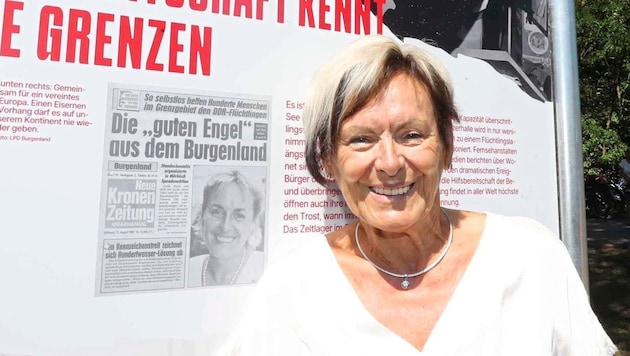

It has been 35 years since the Iron Curtain fell. At the time, Burgenland played a decisive role as an escape route for GDR citizens. A memorial park was opened in Mörbisch to commemorate the events.
 Kronen Zeitung als bevorzugte Google-Quelle hinzufügen
 These were experiences that Bettina Zentgraf, Mayor of Mörbisch, still remembers clearly today. When the refugees crossed the border in 1989, she was just 17 years old. The refugees included not only citizens of the GDR, but also critics of the system from Romania and Bulgaria who spoke no German but only broken English. Zentgraf had to interpret for the gendarmerie at the time, heard the refugees' stories and saw their torture scars. That left a lasting impression, she says.
Lasting memory
That's why the Rust chronicler Wolfgang Bachkönig had an open door when he approached her last year about the upcoming 35th anniversary of the fall of the Iron Curtain. The aim was to create a lasting reminder of these events. As reported, the result is the first memorial park on the border near Mörbisch. A table in the form of the states of Austria and Hungary is to be added in the fall.
Appealing to young people
"With the memorial park, we not only want to appeal to those who lived through those times, but also to young people in particular. The plaques are intended to remind people that it wasn't always possible to simply cross the border - as it is now - but that the world ended at the Iron Curtain, so to speak," says Bachkönig. The chronicler has done a lot of research into contemporary history and has also written a book about the fall of the Iron Curtain.
Everyone wanted to help
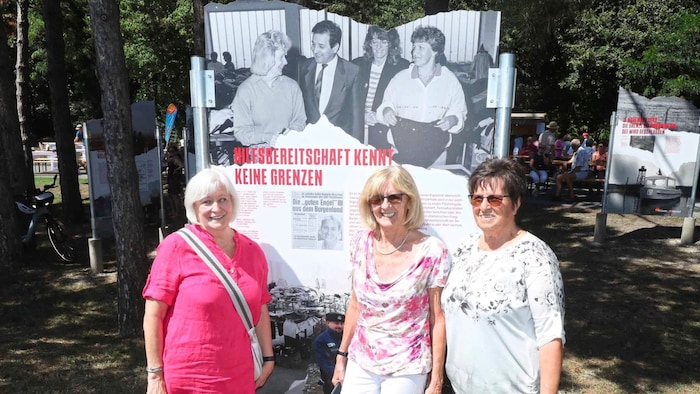
"Mörbisch rose above itself back then," Zentgraf also believes. Many people took in refugees and collected donations. The Winzerhalle in Mörbisch was converted into a reception camp. Ilse Tremmel was a registrar at the time and organized a fundraising campaign for the East Germans. Maria Kanitsch, Hannelore Tremmel and Gertrude Freiler were helpers in the Winzerhalle camp. The snapshot with the then governor Hans Sipötz was also taken at that time.
Contemporary witnesses attended the opening
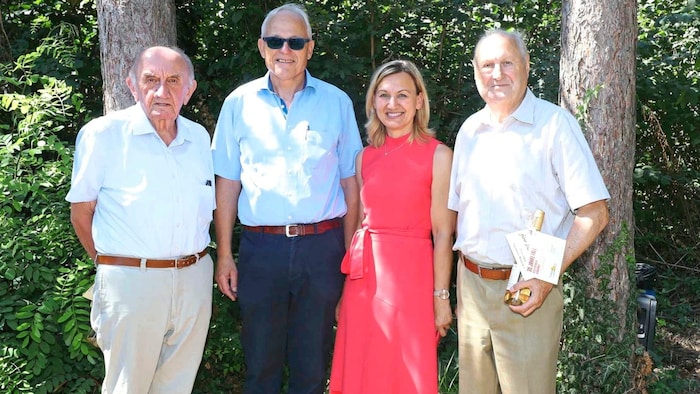
Hungarian border officer Árpád Bella, who ignored the firing order in 1989, the Hungarian ambassador and an envoy from the German embassy also attended the unveiling. In addition to the plaques in Mörbisch, others were erected in St. Margarethen, Siegendorf, Klingenbach and Schattendorf.
Historical event
In spring 1989, Hungary began dismantling the border fortifications with Austria. On June 27, 1989, a highly symbolic meeting took place near Klingenbach/Sopron: In the presence of the Governor of Burgenland, Hans Sipötz, the then Foreign Ministers of Austria and Hungary - Alois Mock and Gyula Horn - cut through the wire fences. However, the border remained guarded. As part of the "Pan-European Picnic" on August 19, 1989 near St. Margarethen in Burgenland, the border was symbolically opened for a few hours. Hundreds of GDR citizens used this window of opportunity to flee to Austria. Subsequently, Hungary finally opened its western border at midnight on September 11, 1989.
This article has been automatically translated,
read the original article here.











Da dieser Artikel älter als 18 Monate ist, ist zum jetzigen Zeitpunkt kein Kommentieren mehr möglich.
Wir laden Sie ein, bei einer aktuelleren themenrelevanten Story mitzudiskutieren: Themenübersicht.
Bei Fragen können Sie sich gern an das Community-Team per Mail an forum@krone.at wenden.