"Anomaly"
“Total loss” of satellite causes puzzlement
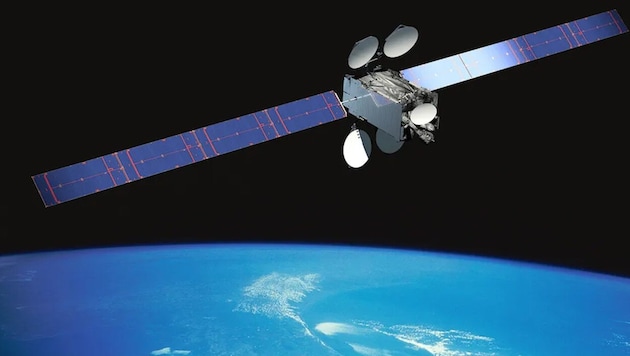

The sudden disappearance of an important satellite belonging to the US operator Intelsat is causing puzzlement. The main question is why the communications satellite, which went into operation at the beginning of 2017, failed at an altitude of around 30,000 kilometers. The company announced that it had started a "comprehensive analysis" to determine the cause.
 Kronen Zeitung als bevorzugte Google-Quelle hinzufügen
 "There are several reasons why a satellite can fail," said Holger Krag, Head of Space Safety at the European Space Agency (ESA). In this case, there were indications that the Intelsat 33e (IS-33e) satellite had broken apart. This could have been caused by internal heating of the propellant or the battery. An impact of microparticles, such as space debris, cannot be ruled out either.
It is also possible that the satellite became charged due to increased solar radiation. However, this is difficult to determine in retrospect, said Krag. The U.S. Space Force's observation program confirmed on Platform X that the satellite had broken into around 20 pieces. Other sources spoke of at least 40 pieces.
"Total loss"
Intelsat reported the "total loss" of IS-33e on Monday. Shortly beforehand, the Luxembourg-based company spoke of an "anomaly" that had caused the satellite to lose power and service for customers in Europe, Africa and parts of the Asia-Pacific region.
Problems with the propulsion system
According to Intelsat, IS-33e was developed and manufactured by Boeing Space Systems. It was launched in August 2016 and went into operation in January 2017. After the launch, there were problems with the propulsion system, which led to a reduction in the expected service life of the satellite.
High-performance satellite
IS-33e belongs to a new generation of very powerful satellites that are able to cover both small areas of the earth and large parts of the globe simultaneously. Geostationary satellites transmit voice, Internet and television to commercial customers as well as governments and non-governmental organizations.
This article has been automatically translated,
read the original article here.











Da dieser Artikel älter als 18 Monate ist, ist zum jetzigen Zeitpunkt kein Kommentieren mehr möglich.
Wir laden Sie ein, bei einer aktuelleren themenrelevanten Story mitzudiskutieren: Themenübersicht.
Bei Fragen können Sie sich gern an das Community-Team per Mail an forum@krone.at wenden.