Horrible suspicion
First death in suicide capsule showed signs of strangulation


After a 64-year-old American woman took her own life for the first time with the "Sarco" suicide capsule in Switzerland, the president of the euthanasia organization "The Last Resort" is still behind bars. One possible reason for the unusually long pre-trial detention: a forensic scientist is said to have found strangulation marks on the deceased.
The case surrounding the first use of the death capsule at the end of September caused a stir and heated discussions. Nitrogen is fed into the cabin, which comes from a 3D printer. A person wishing to die quickly falls unconscious in it and is dead after five minutes.
Pre-trial detention unusually long
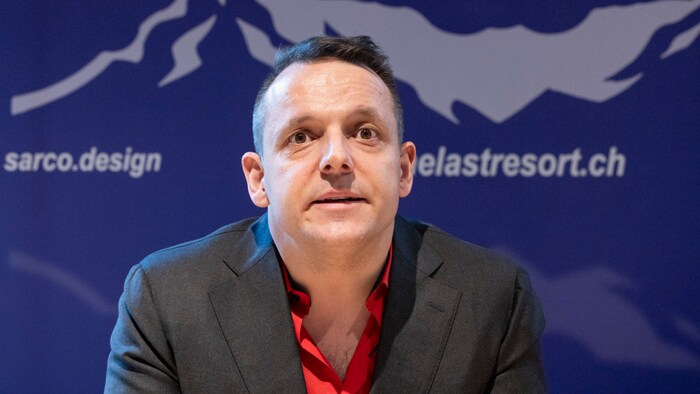
An American woman is the first person to take this step due to her serious illness. Assisted suicide or assisted suicide are legal in Switzerland - but there were still several arrests after the first use of the death capsule. However, Florian Willet from the organization "The Last Resort" is the only one who has now been in custody for a month. A long time for an investigation when the only charge is that of "selfish" assisted suicide.
Strangulation marks cause speculation
As the Dutch newspaper "de Volkskrant" reported, the accusation is said to be much more serious: According to the report, the public prosecutor's office is apparently also investigating intentional homicide. A forensic scientist who examined the American woman a few hours after her death in a wooded area in Schaffhausen found severe injuries to her neck. There is talk of strangulation marks - which apparently raises the question of whether the assisted suicide was assisted.
Willet was alone with the suicide candidate in the forest when she died. Two lawyers and a photographer from "de Volkskrant" only arrived at the scene after her death and, like Willet, were arrested. Unlike the president of the euthanasia organization, however, all the others were released a short time later.
But there is another possible explanation for the strangulation marks: The deceased had suffered from a bone marrow infection (osteomyelitis). This could have caused the suspicious marks on the 64-year-old's neck, a source close to The Last Resort told NZZ.
Video recordings suggest Willet's innocence
According to "de Volkskrant", there are also video recordings that show the dying process. As the camera only reacted to movement, there were gaps in the footage, but it did not show anything suspicious. The only movement recorded inside the capsule was the tensing of the woman's body - but by then she is said to have already been unconscious. Willet had not opened the lid of the suicide capsule.
Journalists from the Netherlands believe that the accusation of intentional homicide was only brought into play to give the public prosecutor's office more room for maneuver in the investigation. The Schaffhausen public prosecutor made no statement and referred to the secrecy of the investigation.
This article has been automatically translated,
read the original article here.











Da dieser Artikel älter als 18 Monate ist, ist zum jetzigen Zeitpunkt kein Kommentieren mehr möglich.
Wir laden Sie ein, bei einer aktuelleren themenrelevanten Story mitzudiskutieren: Themenübersicht.
Bei Fragen können Sie sich gern an das Community-Team per Mail an forum@krone.at wenden.