British controversy
Case for the Supreme Court: When is a woman a woman?

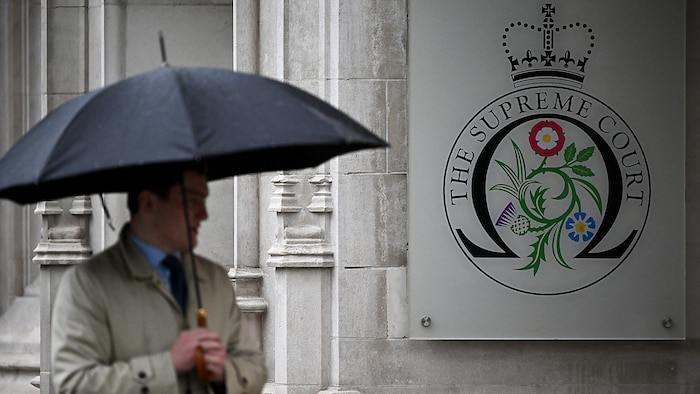
When is a woman a woman? The British Supreme Court in London has to deal with this question. According to critics, two existing laws - the Gender Recognition Act of 2004 and the Equality Act of 2010 - do not provide a clear interpretation. The court's decision could have far-reaching consequences.
 Kronen Zeitung als bevorzugte Google-Quelle hinzufügen
 At the heart of the issue is whether people are only considered women if they were born with female sexual characteristics, or also those people whose gender is recognized as female with a so-called Gender Recognition Certificate (GRC). The Supreme Court's decision, for which no date has yet been set, is intended to set out how transgender people should be treated in law and what it really means to go through the process of gender recognition.
The current debate was triggered in Scotland. The parliament there passed a law in 2018 to bring more women into public bodies. It also defined "woman" as people who live as women and are undergoing or planning to undergo gender reassignment. The initiative For Women Scotland took legal action against this and won after several appeals. The government amended the law, but introduced new guidelines that also recognize people with gender recognition certificates as women. For Women Scotland sued again, but lost in 2022, taking the case all the way to the Supreme Court.
Emotional debate, especially among conservatives
The ruling could have an impact on unisex spaces, women's clubs or sports clubs, among other things, as well as on measures against discrimination, wrote the BBC. Conservatives in particular have been leading an emotional debate on gender issues in the UK for some time. They are calling for only "biological" women to be recognized as women. They argue that it is too easy for men to pretend to be women and commit crimes. One of the most prominent supporters of this view is "Harry Potter" author J.K. Rowling.
People who do not feel they belong to the gender they were assigned at birth are described as transgender. In the UK, around 0.5 percent of the adult population identify as transgender.
This article has been automatically translated,
read the original article here.











Da dieser Artikel älter als 18 Monate ist, ist zum jetzigen Zeitpunkt kein Kommentieren mehr möglich.
Wir laden Sie ein, bei einer aktuelleren themenrelevanten Story mitzudiskutieren: Themenübersicht.
Bei Fragen können Sie sich gern an das Community-Team per Mail an forum@krone.at wenden.