
The big interview
Will peace finally come in 2025, Mr. El-Gawhary?
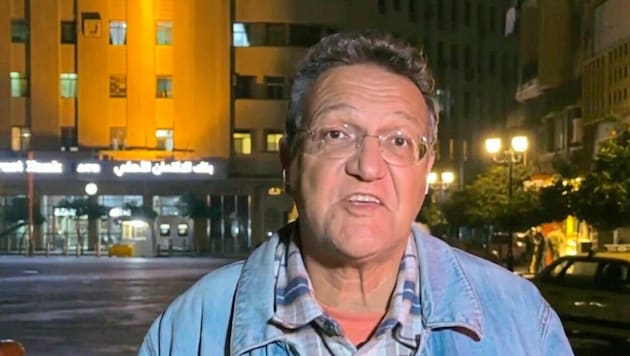
War in the Gaza Strip, escalation in Lebanon, fall of the Assad regime in Syria: For the Middle East, an extremely bloody year is coming to an end with a glimmer of hope. ORF correspondent Karim El-Gawhary (61) reviews it in an interview with Conny Bischofberger in the "Krone". A conversation about frozen babies, torture chambers and the place between two worlds that means home to him.
 Kronen Zeitung als bevorzugte Google-Quelle hinzufügen
 "Tonight was the first time I stopped dreaming about Syria," says Karim El-Gawhary as we talk on the phone on the afternoon of December 26. He is standing at his height-adjustable desk in the office of his apartment, which also serves as the Middle East office of ORF, with a view of the Nile and a somewhat cloudy Cairo. "As you get older, your back gets a bit sore," he explains.
Behind the office is the kitchen, "there's a goulash waiting for me to finish cooking it." His children, who live scattered all over the world, are visiting their parents in Cairo these days. It has only been a week since the Middle East correspondent returned from Syria, which experienced a historic turning point at the beginning of December after 13 years of war.
"Krone": On December 8, the Assad regime was toppled in Syria. What went through your mind then?
Karim El-Gawhary: Many, many moons ago, I studied in Syria for almost a year - I learned Arabic there. I love that country. I couldn't enter Syria for almost 15 years. I was blacklisted because the Syrian regime didn't like my reporting. That's why December 8 was a kind of liberation for me, a really special moment.


















Da dieser Artikel älter als 18 Monate ist, ist zum jetzigen Zeitpunkt kein Kommentieren mehr möglich.
Wir laden Sie ein, bei einer aktuelleren themenrelevanten Story mitzudiskutieren: Themenübersicht.
Bei Fragen können Sie sich gern an das Community-Team per Mail an forum@krone.at wenden.