Natural phenomenon
Storm washes millions of starfish onto Sylt beach
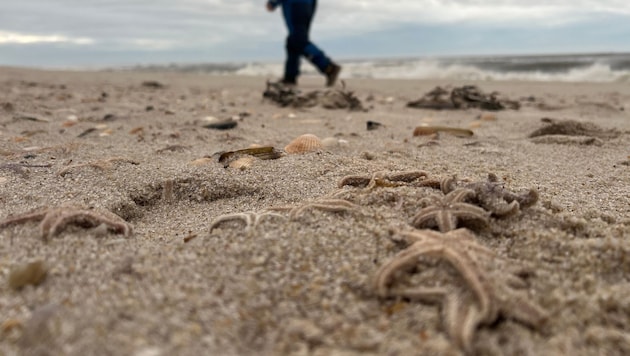

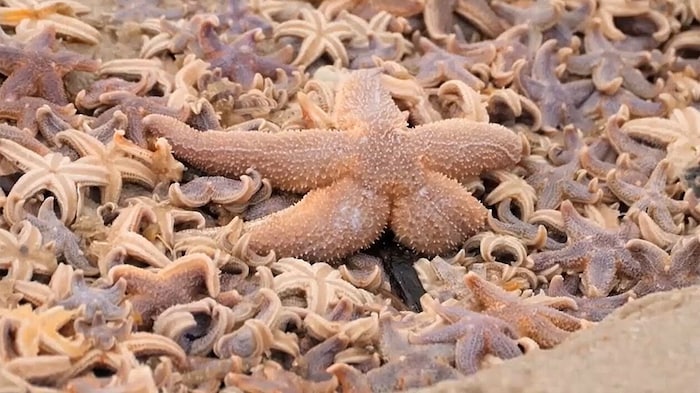
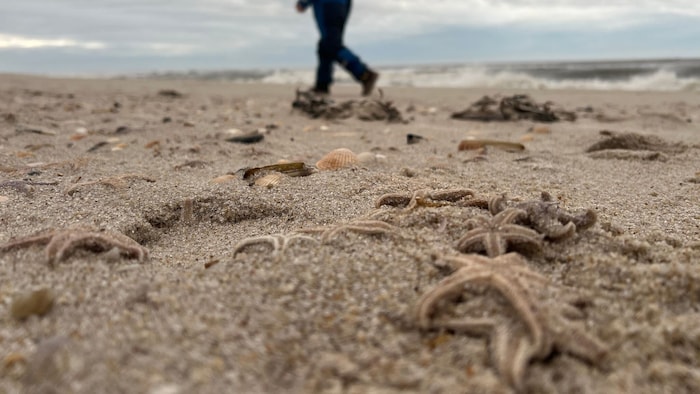
At the weekend, millions of starfish - mostly young ones - were washed up on the German North Sea island of Sylt due to a storm and died on the beaches. It happens all the time that so many starfish are washed up, but this time there are particularly many.
 Kronen Zeitung als bevorzugte Google-Quelle hinzufügen
 On Sylt's West Beach, walkers are currently coming across an unmanageably large number of starfish. According to information from the national park administration, the starfish, most of which are one year old, are torn loose en masse from the subsoil - such as mussel beds - when the sea is heavily churned up by storms.
This phenomenon is repeated regularly
They are therefore unable to hold on to sandy ground and end up on the beach. Sylt's nature conservation ambassador Charlie Esser said that these are mainly starfish with a diameter of a few centimetres. This phenomenon repeats itself regularly and is completely normal. According to the information provided, it does not have a major impact on the animal population.
Animals are not suitable as prey
As Claus von Hoerschelmann, a biologist at the Multimar Wattforum National Park Center in Tönning, has previously explained, the starfish, which are not very nutritious, are hardly suitable as prey for other animals. Even seagulls are not very interested in them.
This article has been automatically translated,
read the original article here.











Da dieser Artikel älter als 18 Monate ist, ist zum jetzigen Zeitpunkt kein Kommentieren mehr möglich.
Wir laden Sie ein, bei einer aktuelleren themenrelevanten Story mitzudiskutieren: Themenübersicht.
Bei Fragen können Sie sich gern an das Community-Team per Mail an forum@krone.at wenden.