Experience & training
Hospice: “Only God knows the end”

58 women and men are working as hospice companions in Carinthia. A 73-year-old companion shares her experiences, talks about the training and how important this help is for people.
 Kronen Zeitung als bevorzugte Google-Quelle hinzufügen
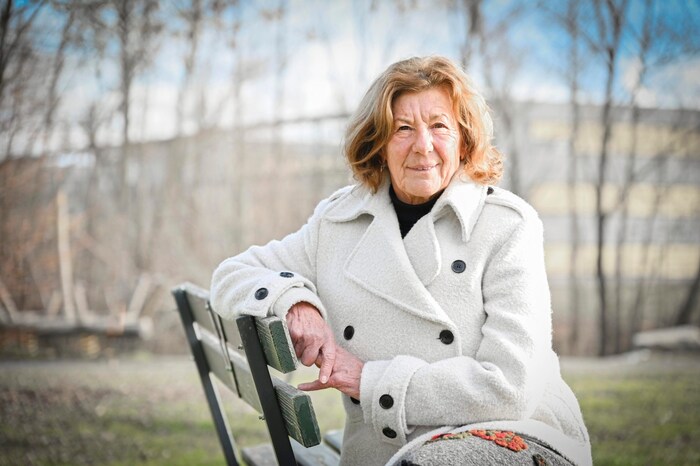
 "Only God decides when life is over. I accompany people on their last journey out of conviction, it's a matter close to my heart to be there for them," says Brigitte Pekastnig from the Red Cross. The 73-year-old founded the hospice support service there, which now employs 58 end-of-life caregivers.
Train more people
"We would like even more people to complete the hospice training." But one thing should be said straight away: "Not everyone is suitable for taking on this difficult task." Hospice means something like enveloping: "Enabling people to live with dignity until their last breath and being there for them."
Caritas and Diakonie also offer this service. "The support is a win-win situation for everyone. It ranges from sitting at the bedside, talking and listening, to time management for relatives." Hospice support very often lasts several months. Pekastnig: "An important part of the work is to create a structure for the people concerned."

Love for people should be felt and conveyed as much as possible when accompanying sick and dying people.
Rotkreuz-Präsident Dr. Martin Pirz
Experiences with death
Of course, the end-of-life caregivers experience a lot: "It's always close to each of us, which is why there are regular supervisions and team meetings where we talk about the experience at the bedside." If those affected want to talk about death, this is of course also discussed. However, the illness is taboo: "That's not our job, we're not doctors." A very close bond develops in the close relationship. And the dying often make wishes: "To come home one more time, to sit by Lake Wörthersee one more time, to enjoy the lake." Just recently, a man was taken to his workplace one last time: "It was his fondest wish. He wanted to see all his colleagues one last time. Everyone was there, without exception!" Two days later, he closed his eyes.
It is also important to laugh and sing with the seriously ill. Pekastnig: "Sometimes there are also messages that we are asked to deliver. Of course, we do that too." No one should die alone. "It would be nice to find enough hospice caregivers to cover the demand in the country," says Pekastnig, who worked at the hospital for 43 years. The training covers the areas of psychology, communication and social work and thus provides optimal preparation for end-of-life care. Information at: 050/91441046
This article has been automatically translated,
read the original article here.











Da dieser Artikel älter als 18 Monate ist, ist zum jetzigen Zeitpunkt kein Kommentieren mehr möglich.
Wir laden Sie ein, bei einer aktuelleren themenrelevanten Story mitzudiskutieren: Themenübersicht.
Bei Fragen können Sie sich gern an das Community-Team per Mail an forum@krone.at wenden.